Blue Catfish
Blue catfish are the giants of Kentucky Lake. As the largest freshwater catfish in the reservoir, they attract anglers hoping to catch one of the biggest fish swimming in Kentucky Lake. While trophy-sized fish often get the spotlight, blue catfish of all sizes provide excellent fishing throughout the year.
Unlike many species that spend much of their time around shoreline cover, blue catfish are closely tied to the Tennessee River channel and other deep-water habitat. Their size, strength, and ability to thrive in large reservoirs have made Kentucky Lake one of the country’s premier destinations for blue catfish fishing.
Kentucky Blue Catfish Limits
Identification
How to Identify a Blue Catfish
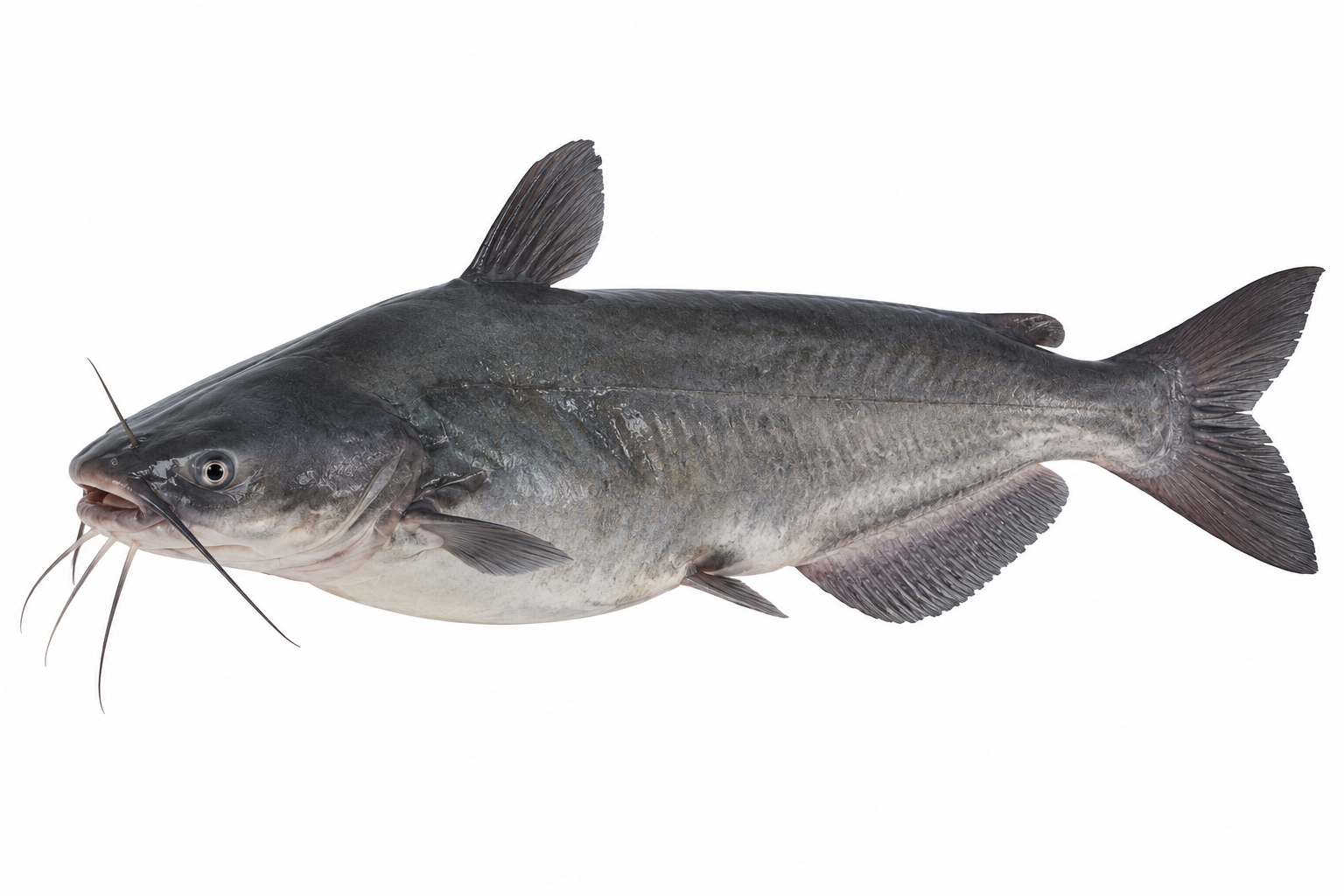
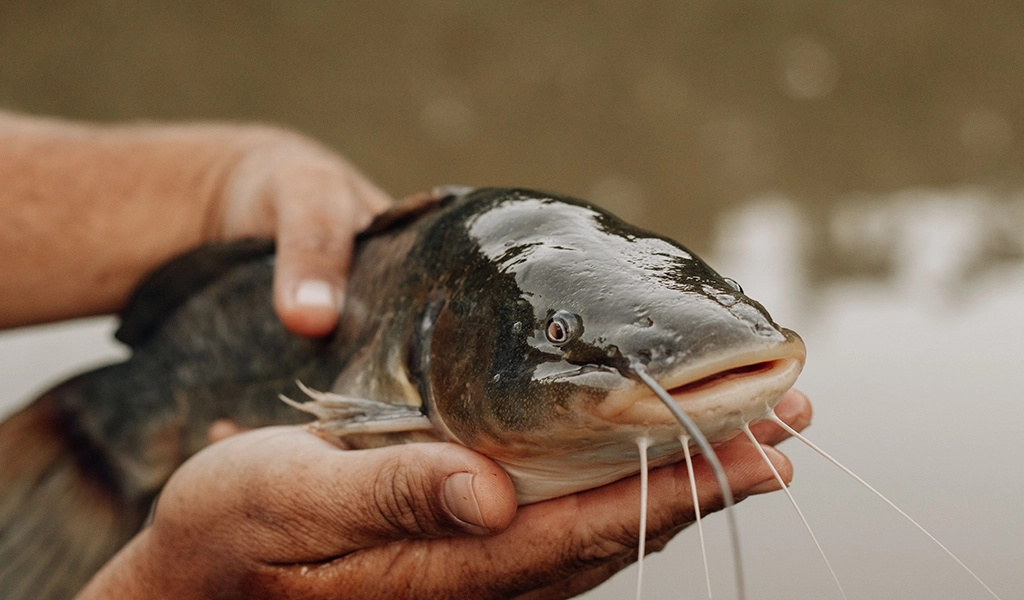
Blue catfish have a long, muscular body with a deeply forked tail and smooth, scaleless skin.
Their back is typically slate blue or bluish-gray, gradually fading to silver sides and a bright white belly. Long barbels, often called whiskers, surround the mouth and help the fish locate food in dark or muddy water.
Blue catfish are sometimes confused with channel catfish, but mature blue catfish usually lack the dark spots commonly found on channel cats. They also have a straighter-edged anal fin with more rays, giving experienced anglers another reliable way to identify the species.
How Big Do They Get?
No freshwater fish in Kentucky Lake grows larger than the blue catfish.
Many fish caught by anglers weigh between 10 and 40 pounds, but fish exceeding 50 pounds are landed every year. True trophy blue catfish can surpass 80 pounds, and the largest individuals may live for more than two decades.
Their combination of rapid growth, long lifespan, and enormous size has earned blue catfish a reputation as one of Kentucky Lake’s ultimate trophy fish.
As the largest freshwater catfish in the reservoir, they attract anglers hoping to catch one of the biggest fish swimming in Kentucky Lake.
Seasonal Fishing
Spring Fishing
As water temperatures rise, blue catfish become increasingly active before the spawn.
As water temperatures climb, blue catfish begin using tributaries, channel edges, and shallower feeding areas where baitfish become more active. Late spring also marks the spawning season, when males seek out secluded cavities beneath logs, root systems, and other protected cover to guard developing eggs.
Summer Patterns
During the summer, blue catfish are commonly found around current and deeper water.
River channels, ledges, and deep flats become productive as fish follow schools of shad and other forage. Current generated through Kentucky Dam frequently improves feeding activity by concentrating baitfish along channel edges.
Blue catfish also become more active after sunset, making nighttime fishing especially productive during the summer.
Fall Fishing
Cooling water temperatures trigger another period of heavy feeding.
Cooling water temperatures encourage blue catfish to feed aggressively as they prepare for winter. Large blue catfish are commonly found along channel ledges, deep flats, and areas where baitfish become concentrated.
This is one of the best times of year to target trophy-sized blue catfish.
Winter Opportunities
Blue catfish remain active throughout the winter and continue feeding despite cold water temperatures.
Large schools of baitfish often determine where blues are found, with many fish holding near deep channels and current breaks. Cold-weather fishing regularly produces some of the heaviest blue catfish caught all year.
Catching Guide
Where to Find Blue Catfish on Kentucky Lake
Depth and current are two of the biggest keys to locating blue catfish.
Productive areas include:
- Main river channels
- Deep channel ledges
- Creek channel intersections
- Submerged humps
- Dam tailwaters
- Current seams
- Deep holes
- Flats bordering river channels
Rather than staying in one location year-round, blue catfish adjust their movements as water temperatures, current, and baitfish locations change. Many of Kentucky Lake’s largest fish spend much of their lives roaming open water near the Tennessee River channel.
What Do Blue Catfish Eat?
Blue catfish are opportunistic predators with a diet that changes as they grow.
Young fish feed on aquatic insects, freshwater mussels, crayfish, and other invertebrates before gradually shifting toward larger prey. Adult blue catfish feed heavily on threadfin shad, gizzard shad, skipjack herring, and other fish found throughout Kentucky Lake.
Because adult blue catfish feed heavily on baitfish, fresh cut bait consistently produces some of the best results on Kentucky Lake. Cut gizzard shad, skipjack herring, live bait, nightcrawlers, shrimp, and prepared catfish baits all produce fish, with fresh bait often outperforming frozen alternatives.
A Kentucky Lake Favorite
Blue catfish are one of Kentucky Lake’s most recognizable sport fish and have helped establish the reservoir as a destination for trophy catfishing.
Their ability to grow to exceptional sizes, combined with strong year-round fishing opportunities, keeps them high on the list for anglers visiting the lake. While trophy fish receive much of the attention, blue catfish of all sizes provide outstanding fishing and remain an important part of Kentucky Lake’s diverse fishery.
Blue Catfish Frequently Asked Questions
Local Fishing Guides
You Might Also Like