Black Crappie
Black crappie are one of Kentucky Lake’s most recognizable panfish and have earned a reputation for producing memorable days on the water. Anglers value them for their excellent table fare, but they are equally respected for the challenge of locating suspended schools around deep cover for much of the year.
Although black and white crappie often share the same lakes, black crappie are more commonly associated with clearer water and submerged structure. Understanding those preferences can make a noticeable difference when searching for fish on Kentucky Lake.
Kentucky Black Crappie Limits
The daily limit is the number of a particular sport fish species you may keep in one day’s fishing. A possession limit is two times thed aily limit for all fish species with a daily limit, excluding previously processed fish. These limits are set by the Kentucky Deparment of Fish & Wildlife and apply to the state of Kentucky.
Identification
How to Identify a Black Crappie
At first glance, black crappie look similar to white crappie, but a closer look quickly reveals the differences.
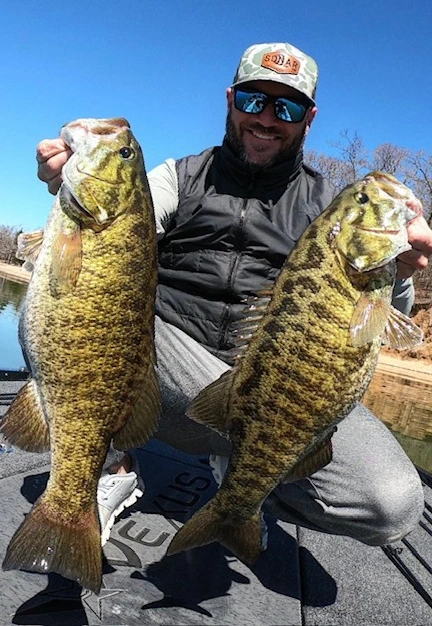
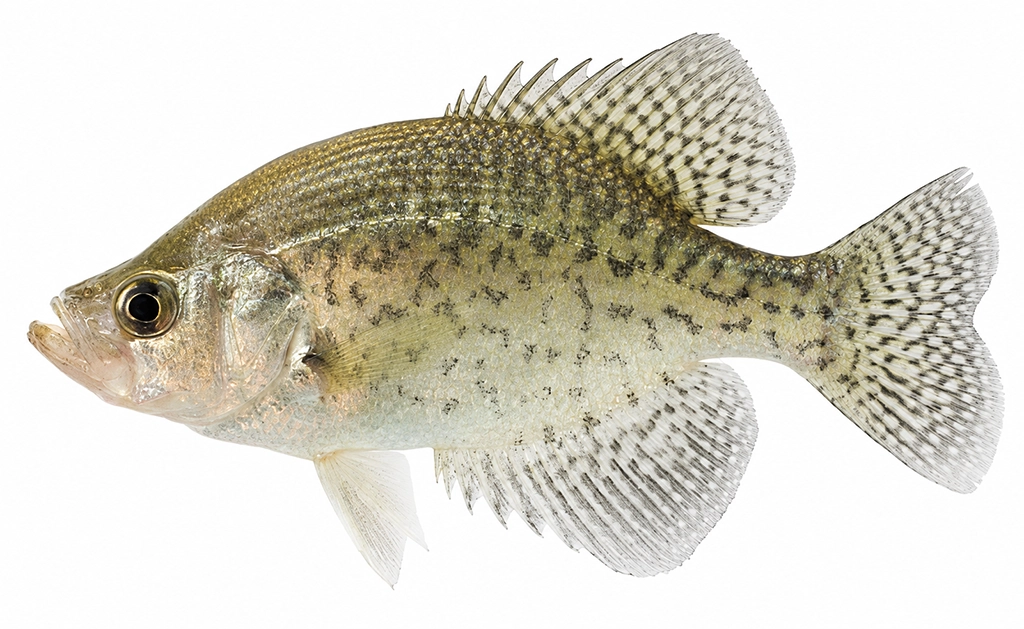
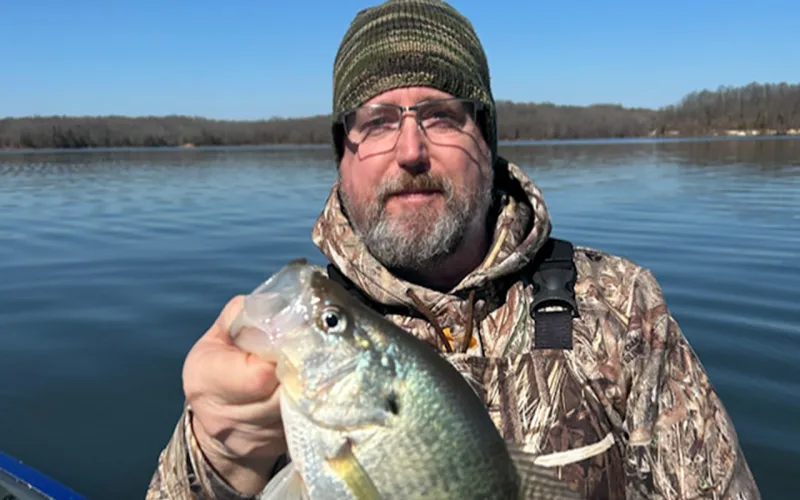
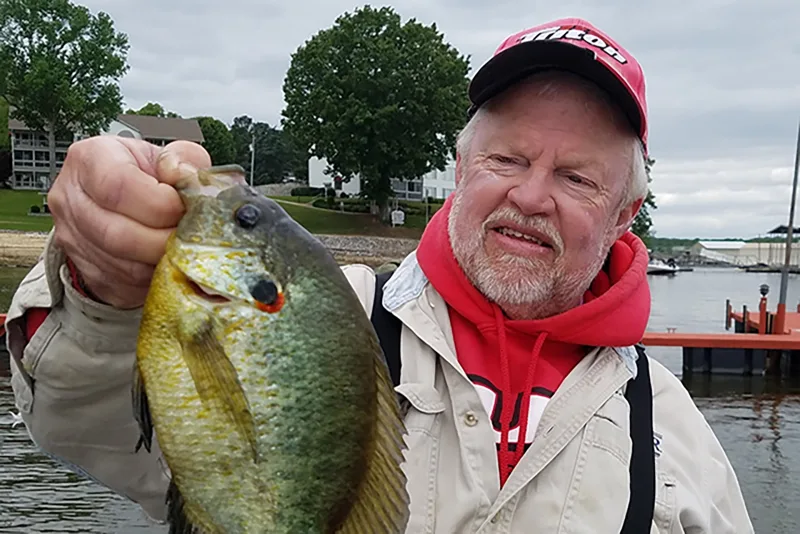
Instead of the vertical bars found on white crappie, black crappie are covered with irregular dark spots scattered across their sides and fins. Their body is deep and compressed with a gently arched back, while the large mouth extends beneath the eye.
Another dependable way to identify the species is by counting the dorsal spines. Black crappie have seven or eight dorsal spines, compared to five or six on a white crappie.
How Big Do They Get?
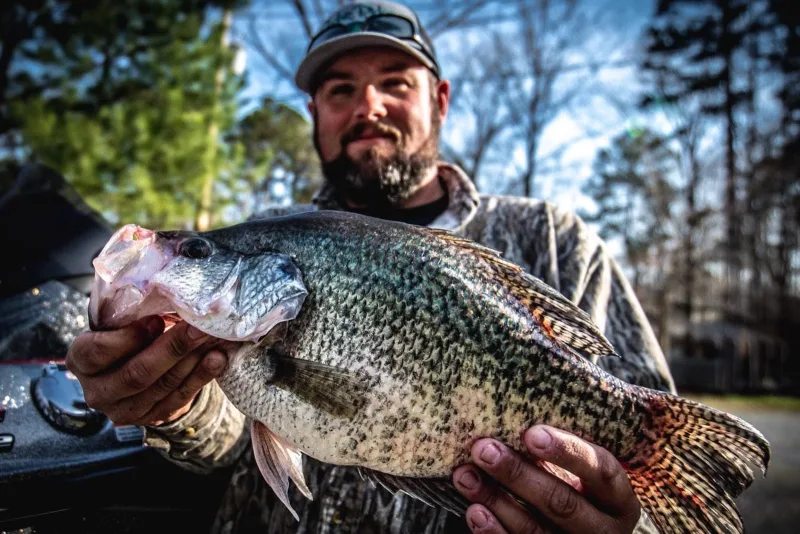
Most black crappie caught on Kentucky Lake measure between 9 and 12 inches and weigh from one-half to one pound.
Fish exceeding 12 inches are considered quality catches, and crappie approaching two pounds are always worth celebrating. Consistent recruitment and productive habitat continue to support healthy populations throughout the reservoir.
Once a school is located, the action can be steady, rewarding, and surprisingly consistent.
Seasonal Fishing
Spring Fishing
Rising water temperatures trigger one of the most anticipated crappie seasons on Kentucky Lake.
Black crappie move into protected coves and shoreline cover as spawning begins. Fallen trees, brush, docks, and woody cover all become productive as fish gather in relatively shallow water.
This seasonal migration gives anglers an opportunity to target fish that are easier to locate than during much of the rest of the year.
Summer Patterns
After spawning, black crappie gradually leave the shallows and settle around deeper structure.
Standing timber, submerged brush, and creek channels become primary holding areas, with many fish suspending several feet above the bottom. Modern sonar has become an important tool for locating these suspended schools during the summer months.
Fall Fishing
Cooling water temperatures bring another change in behavior.
As baitfish become more active, black crappie frequently reposition around brush and timber near creek mouths and secondary points. Stable weather often creates excellent fishing conditions before fish begin transitioning back toward deeper winter habitat.
Winter Opportunities
Cold weather doesn’t stop black crappie from feeding.
Large schools commonly gather around deep brush, standing timber, and creek channels where water conditions remain stable. Once a productive piece of cover is located, anglers can often catch multiple fish before the school moves.
Catching Guide
Where to Find Black Crappie on Kentucky Lake
Clearer water and abundant cover are two of the biggest factors in locating black crappie.
Anglers regularly catch them around:
- Standing timber
- Brush piles
- Boat docks
- Stake beds
- Creek channels
- Submerged roadbeds
- Secondary points
- Woody cover
As the seasons change, black crappie shift between shallow spawning habitat and deeper structure. Rather than hugging the bottom, they often suspend around cover, especially once water temperatures begin to climb.
What Do Black Crappie Eat?
The diet of black crappie changes as they grow.
Young fish feed on plankton, insects, and other tiny aquatic organisms before gradually shifting to minnows, threadfin shad, and small fish. That preference for baitfish explains why compact lures that imitate natural forage consistently produce results.
Live minnows, tube jigs, curly-tail grubs, and small soft plastics remain among the most dependable presentations throughout the year. Adjusting lure depth is often more important than changing lure color, especially when fish are suspended.
A Kentucky Lake Favorite
For many anglers, black crappie fishing is all about finding the right piece of cover.
Once a school is located, the action can be steady, rewarding, and surprisingly consistent. Their predictable relationship with timber, brush, and submerged structure has made black crappie one of the signature panfish species found throughout Kentucky Lake.
Get Started With A Guide
Black Crappie Frequently Asked Questions
You Might Also Like