Sauger
Sauger have long been part of Kentucky Lake’s cool-season fishery. Closely related to walleye, they thrive in moving water and are especially active during the colder months when many other game fish become less predictable.
Although they don’t receive the same attention as bass or crappie, sauger have developed a loyal following among anglers who enjoy fishing river channels, current, and tailwaters. Their excellent table fare and willingness to strike artificial lures make them a rewarding species to pursue on Kentucky Lake.
Kentucky Sauger Limits
Identification
How to Identify a Sauger
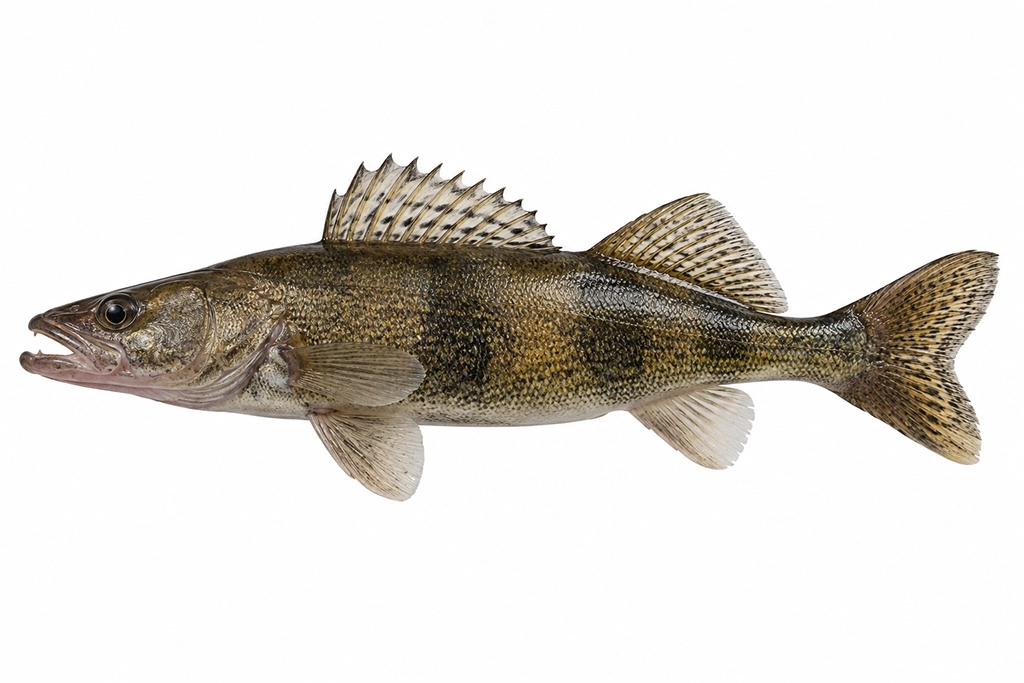
Sauger have a streamlined body built for life in moving water.
Their back ranges from gray to dark brown, fading into brassy or bronze-colored sides with a pale white belly. Dark blotches cover much of the body, and the dorsal fin is marked with distinct black spots.
That spotted dorsal fin is one of the easiest ways to tell a sauger from a walleye, whose dorsal fin is generally free of spots. Sauger are also darker in color and usually grow smaller than walleye.
How Big Do They Get?
Most sauger caught on Kentucky Lake measure between 12 and 18 inches and weigh one to three pounds.
Larger fish are caught each year, but sauger rarely reach the size of mature walleye. Even so, their aggressive strikes and strong fight on light tackle make them a favorite among anglers targeting cool-water species.
Sauger is a reason to not put away your fishing gear when temperatures drop
Seasonal Fishing
Spring
Spring marks the spawning season for sauger.
As water temperatures begin to rise, adults move into shallow gravel and rocky areas with flowing water to reproduce. After spawning, many fish gradually return to deeper channels and current-oriented habitat.
Summer
Warm water slows sauger activity compared to other times of the year.
Most fish remain close to deeper river channels, current breaks, and cooler water where they conserve energy while continuing to feed on smaller fish and aquatic prey.
Fall
As Kentucky Lake cools, sauger become more active.
Baitfish movements and increasing current often concentrate fish along channel edges and rocky structure. Fall marks the beginning of another productive period that continues well into winter.
Winter
Cold weather is when sauger are most commonly targeted on Kentucky Lake.
Fish gather around deeper channels, current seams, and tailwater areas where moving water keeps forage available. Winter fishing below Kentucky Dam has become a tradition for many anglers hoping to catch sauger during their most active season.
Catching Guide
Where to Find Sauger on Kentucky Lake
Current shapes much of a sauger’s daily routine.
Kentucky Lake anglers often find sauger around:
- River channels
- Creek mouths
- Gravel bars
- Rocky points
- Dam tailwaters
- Channel drop-offs
- Current seams
- Deep pools
As water levels and current change, sauger shift to nearby structure that provides both protection from fast-moving water and easy access to baitfish.
What Do Sauger Eat?
The diet of a sauger changes as it grows.
Young fish begin by feeding on zooplankton and aquatic insects before gradually shifting to crayfish, leeches, and baitfish. Adult sauger feed primarily on small fish, using their excellent eyesight to hunt in stained water and low-light conditions.
Jigging spoons, soft plastic grubs, blade baits, and minnows are among the most productive presentations because they closely resemble the forage sauger naturally pursue.
A Kentucky Lake Favorite
Sauger have earned a place in Kentucky Lake’s winter fishing tradition.
Current, cool water, and rocky river habitat define much of their life in the reservoir, and those same conditions create some of the year’s most consistent sauger fishing. For anglers who don’t put away their fishing gear when temperatures drop, sauger provide another reason to spend time on Kentucky Lake.
Learn From A Local Guide
Sauger Frequently Asked Questions
You Might Also Like