Center Furnace Trail
Why Should You Visit Center Furnace Trail?
Some trails take you deeper into the forest. Center Furnace Trail takes you back in time.
Located near The Nature Station, this short interpretive trail leads visitors through the remains of the Center Iron Furnace, one of several iron furnaces that operated in western Kentucky during the 1800s. It’s an easy walk that combines history with the quiet surroundings of Land Between the Lakes, making it a worthwhile stop whether you have thirty minutes or an entire day to explore.
Even if hiking isn’t your main reason for visiting LBL, Center Furnace Trail offers a chance to experience a piece of the region’s past that many visitors don’t realize exists.
A Short Walk Through Local History
At just three-tenths of a mile, Center Furnace Trail is one of the shortest walks in Land Between the Lakes. The trail is easy to follow and includes interpretive signs that explain how the iron furnace operated and why the industry played such an important role in the region more than 150 years ago.
Rather than simply passing the historic ruins, you’ll gain a better understanding of the people who lived and worked here and the community that once surrounded the furnace.
It’s a short walk, but one that leaves visitors with a deeper appreciation for the history of Land Between the Lakes.
What Can You Do on Center Furnace Trail?
Center Furnace Trail offers a different kind of outdoor experience. Instead of focusing on distance, it’s about slowing down, reading the signs, and imagining what life looked like here long before Land Between the Lakes became a national recreation area.
For History Buffs
The preserved furnace ruins and interpretive displays provide an interesting look at Kentucky’s early iron industry. If you enjoy local history, this is one of the most unique historic sites in Land Between the Lakes.
For Families
The short distance makes the trail an easy choice for families with young children. It’s long enough to explore without becoming tiring, and the interpretive signs offer opportunities to ask questions and learn together.
For Casual Walkers
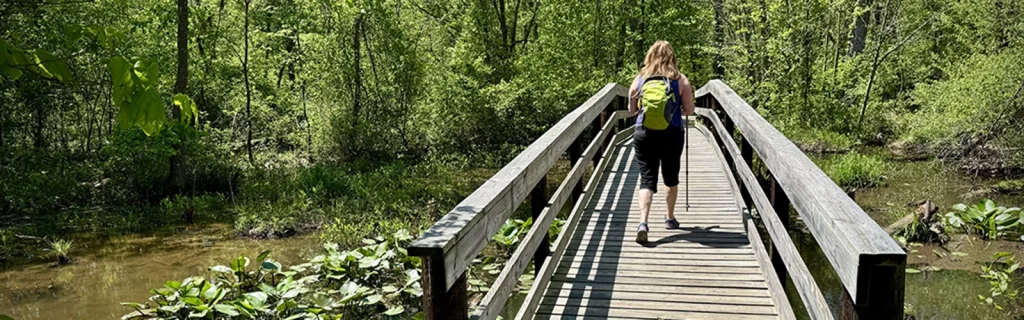
Not every outing has to be a long hike. Center Furnace Trail is a great option if you’re looking for a relaxing walk that combines history with a peaceful woodland setting.
For Visitors Short on Time
If you’re already planning to visit The Nature Station, it’s easy to add Center Furnace Trail to your itinerary. The short distance makes it one of the quickest stops in the area while still offering something unique to see.
Location
What Can You Expect to See?
The highlight of the trail is the remains of the historic Center Iron Furnace, but there’s more to notice than the stone structure itself.
Interpretive signs explain how iron was produced here during the 1800s and how the furnace supported a once-busy industrial community. As you walk through the surrounding forest, it’s easy to imagine how different this area looked when workers, wagons, and furnaces filled the landscape.
Today, nature has reclaimed much of the site, creating an interesting contrast between the quiet woods and the history hidden within them.
Before You Go
Center Furnace Trail is short and easy to walk, so most visitors spend anywhere from 20 to 45 minutes exploring the site. Comfortable walking shoes are recommended, and taking your time to read the interpretive signs will help you get much more out of the experience than simply walking past the ruins.
Please help preserve this historic site by staying on the marked trail and leaving the ruins undisturbed. While it’s tempting to climb on old stone structures or collect pieces you may find nearby, these historic features are protected so future visitors can experience them as well.
Frequently Asked Questions
Nearby Places
You Might Also Like